
If you’ve been living with chronic back pain, leg pain, or numbness that shoots down your arms, you’ve probably heard the word “surgery” more than once. Maybe your doctor mentioned spinal fusion, laminectomy, or disc removal. Perhaps you’ve been told that surgery is your “only option” if you want real relief. But here’s something you might not know: for many people dealing with herniated discs, degenerative disc disease, sciatica, or spinal stenosis, surgery isn’t the only path forward. Non-surgical spinal decompression offers a proven, conservative alternative that has helped countless patients avoid the operating room altogether. Here in Eagle, ID, we’ve seen firsthand how this gentle, targeted therapy can change lives without a single incision.
This article will walk you through everything you need to know about non-surgical spinal decompression. We’ll explain what it is, how it works, who it helps, and why it deserves serious consideration before you schedule that surgery consultation. Whether you’re exploring your options for the first time or you’ve been told surgery is inevitable, this information could open doors you didn’t know existed.
What is Non-Surgical Spinal Decompression?
Non-surgical spinal decompression is a safe, FDA-cleared therapy that uses controlled traction to gently stretch the spine, creating negative pressure within spinal discs. This negative pressure can help herniated or bulging disc material retract, taking pressure off pinched nerves while promoting nutrient-rich fluid flow into the discs to support natural healing.
Table of Contents
- Understanding Spinal Compression and Why It Causes Pain
- What Non-Surgical Spinal Decompression Actually Does
- Conditions That Respond Well to Decompression Therapy
- How the Treatment Process Works
- Comparing Surgical vs. Non-Surgical Approaches
- How Chiropractic Care Fits Into Your Recovery Plan
- Supporting Your Spine Between Treatments
- When to Consider Spinal Decompression
- Myths vs. Facts About Spinal Decompression
- Final Thoughts from The Chiropractor at Castlebury
Understanding Spinal Compression and Why It Causes Pain
Your spine is an incredible structure. Twenty-four movable vertebrae stacked carefully, cushioned by gel-filled discs, held together by ligaments, and protected by layers of muscle. When everything works correctly, you can bend, twist, lift, and move without a second thought. But when something goes wrong—when a disc bulges, when arthritis narrows the spaces between bones, when scar tissue builds up—the delicate balance breaks down.
Spinal compression happens when the spaces in your spine become too narrow. This can put pressure on the spinal cord itself or on the nerve roots that branch out to the rest of your body. The result? Pain that can be sharp or dull, burning or aching. Numbness that makes your fingers feel thick and clumsy. Tingling that runs down your leg like electricity. Weakness that makes simple tasks exhausting.
The most common culprits include herniated discs (when the soft inner material pushes through the tough outer layer), degenerative disc disease (when discs lose height and hydration over time), spinal stenosis (narrowing of the spinal canal), and facet joint arthritis. Compression can also result from poor posture, repetitive stress, injuries, or simply the wear and tear of living an active life.
Here’s what many people don’t realize: compression doesn’t always require surgical intervention. While surgery may be necessary in severe cases—such as when there’s significant nerve damage, loss of bowel or bladder control, or progressive weakness—most cases fall into a gray area where conservative care can be remarkably effective. Non-surgical spinal decompression targets the root mechanical problem without cutting, fusing, or permanently altering your anatomy.
What Non-Surgical Spinal Decompression Actually Does
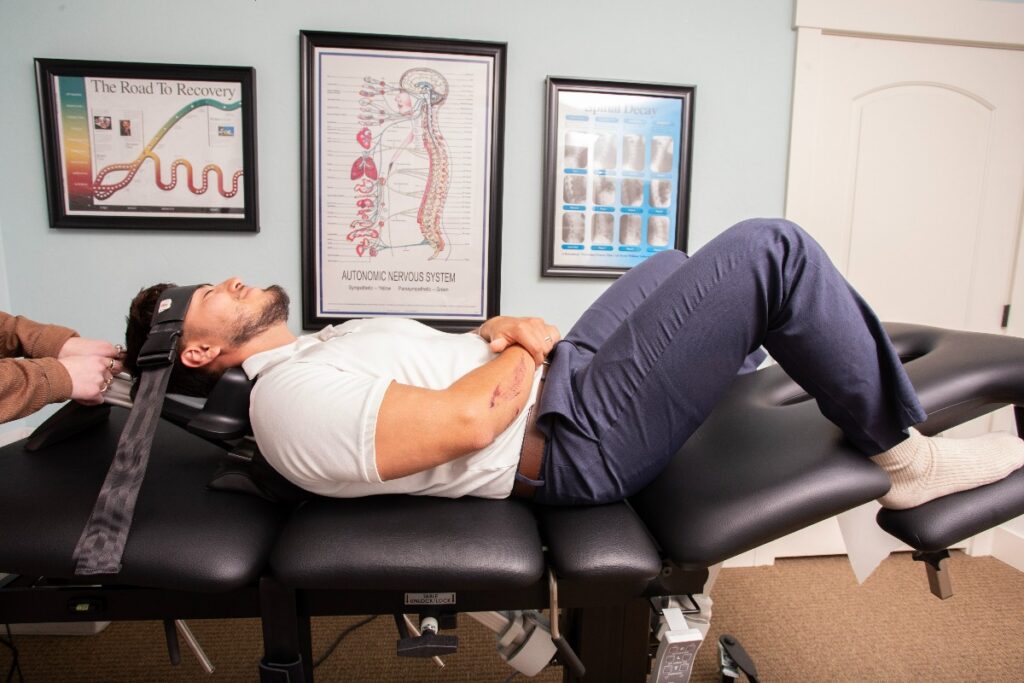
Let’s break down the science without getting too technical. Non-surgical spinal decompression uses a specialized table that applies gentle, computer-controlled traction to your spine. You lie comfortably on the table, secured with a harness, while the machine creates a pulling force that gradually stretches the spine. This isn’t like old-style traction that simply yanked on the spine. Modern decompression therapy is precise, rhythmic, and carefully calibrated to your specific condition.
The goal is to create negative pressure—technically called negative intradiscal pressure—within the affected disc or discs. Think of it like a vacuum effect. When the spine stretches just right, the pressure inside the disc drops below atmospheric pressure. This vacuum-like environment can encourage several beneficial changes. Herniated or bulging disc material may retract back toward the center of the disc. Nutrient-rich fluids, oxygen, and healing factors can flow into the disc more easily. Compressed nerves get more space to breathe.
Research indicates that spinal decompression can be effective for certain conditions when combined with appropriate supportive care. Studies have shown improvement in pain levels, functional mobility, and quality of life for patients with herniated lumbar discs and chronic low back pain. Evidence from clinical trials suggests that many patients experience significant relief without surgical intervention.
What makes this therapy different from simple stretching or hanging upside down? The computerized control. The decompression table uses sensors and algorithms to apply force in cycles—pulling, relaxing, pulling, relaxing—in a way that prevents your muscles from tensing up and fighting the treatment. Your body’s natural protective response (muscle guarding) is bypassed, allowing the therapy to reach deeper structures that wouldn’t respond to basic traction.
Conditions That Respond Well to Decompression Therapy
Non-surgical spinal decompression isn’t a cure-all, but it has shown promise for a range of specific conditions. Let’s look at who tends to benefit most from this approach.
Herniated and Bulging Discs: When disc material pushes out of place and presses on a nerve root, the resulting pain can be debilitating. Decompression therapy creates the negative pressure needed to help that material retract, reducing nerve irritation. Many patients with confirmed disc herniations have avoided surgery through consistent decompression treatment combined with rehabilitative exercises.
Degenerative Disc Disease: As discs lose height and hydration with age, the space between vertebrae narrows. This can lead to nerve compression, facet joint stress, and chronic pain. While decompression can’t reverse aging, it can improve fluid movement into degenerated discs and reduce mechanical stress on surrounding structures. Patients often report improved mobility and reduced daily pain.
Sciatica: When the sciatic nerve becomes compressed or irritated, pain can radiate from the lower back down through the buttock and leg. Whether caused by a herniated disc, spinal stenosis, or piriformis syndrome, decompression therapy can address the mechanical compression component. Combined with targeted exercises and adjustments, many sciatica sufferers find meaningful relief.
Spinal Stenosis: This narrowing of the spinal canal or nerve root openings is common in older adults. While decompression won’t widen bone structures, it can create more space temporarily, reduce inflammation, and improve nerve function. Some patients with mild to moderate stenosis manage their symptoms effectively with regular decompression sessions.
Facet Joint Syndrome: When facet joints become arthritic or inflamed, they can cause localized back pain and stiffness. Decompression reduces the load on these joints, allowing them to move more freely and with less irritation.
Failed Back Surgery Syndrome: Patients who have undergone spinal surgery but continue to experience pain often feel hopeless. Non-surgical decompression offers a non-invasive option to address ongoing compression issues without additional surgical trauma.
Here in Eagle, we’ve worked with patients across all these categories. The common thread? Most had been told that surgery was their next step. Many chose to try conservative care first and found they didn’t need that surgery after all.
How the Treatment Process Works
Understanding what happens during a typical decompression treatment can help ease any anxiety you might have about trying this therapy. The process is straightforward, gentle, and completely non-invasive.
Your first visit will include a thorough examination and review of any imaging you’ve had (X-rays, MRIs, CT scans). We’ll discuss your pain history, what makes it better or worse, and what your goals are. Not everyone is a candidate for decompression—we’ll be honest about whether it’s appropriate for your specific situation.
If decompression is recommended, you’ll schedule a series of treatments. Most protocols involve sessions 3-5 times per week for several weeks, typically ranging from 12 to 20 sessions total. Each session lasts about 20-30 minutes on the decompression table.
During treatment, you’ll lie face-up or face-down on a comfortable table (depending on whether we’re treating your lower back or neck). A harness fits snugly around your pelvis or chest, connecting to the computerized traction system. The machine gradually applies gentle pulling force, holds it for a period, then releases. This cycle repeats throughout the session. Most patients find it relaxing—some even fall asleep.
You’ll feel a gentle stretching sensation, but it shouldn’t hurt. If you experience pain during treatment, we adjust the settings immediately. The entire experience should be comfortable and calming.
After each session, you might spend additional time on ice, heat, or electrical stimulation to enhance the effects. We also incorporate specific exercises to strengthen the muscles supporting your spine and prevent future problems. This comprehensive approach—decompression plus rehabilitation—produces better long-term outcomes than decompression alone.
Progress is typically gradual. Some patients notice improvement within the first few sessions. Others don’t feel significant change until they’re several weeks into treatment. This is normal. Healing takes time, and disc tissue responds slowly to mechanical changes.
Comparing Surgical vs. Non-Surgical Approaches
Let’s address the elephant in the room: how does non-surgical decompression stack up against actual spine surgery? It’s a fair question, and one that deserves an honest answer.
Spinal surgery—whether fusion, laminectomy, discectomy, or artificial disc replacement—can be lifesaving for certain patients. When there’s severe nerve compression causing progressive weakness, loss of reflexes, or bowel/bladder dysfunction, surgery may be the only appropriate option. In cases of spinal instability, fractures, tumors, or infections, conservative care isn’t enough.
But here’s what research consistently shows: for many common spine conditions—especially herniated discs, degenerative disc disease, and non-severe stenosis—surgical and non-surgical outcomes are often similar when measured over time. Multiple studies have found that patients who initially choose conservative care have comparable pain relief and function at one-year and two-year follow-ups when compared to those who undergo surgery, but without the surgical risks.
Surgery carries inherent risks: infection, bleeding, anesthesia complications, nerve damage, failed back surgery syndrome, and the possibility that pain may persist or even worsen. Recovery time ranges from weeks to months. Many procedures are irreversible—once vertebrae are fused or discs are removed, you can’t go back.
Non-surgical decompression, by contrast, is non-invasive. There’s no cutting, no anesthesia, no hospital stay. The main “risks” are temporary soreness (rare) and the possibility that it simply doesn’t provide enough relief (in which case surgery remains an option). You lose nothing by trying conservative care first except a few weeks of time.
| Factor | Spinal Surgery | Non-Surgical Decompression |
|---|---|---|
| Invasiveness | Highly invasive with incisions, tissue disruption | Completely non-invasive, no incisions |
| Recovery Time | Weeks to months; activity restrictions | Minimal downtime; normal activity typically resumes quickly |
| Risks | Infection, bleeding, nerve damage, anesthesia risks | Minimal; occasional temporary soreness |
| Reversibility | Often permanent alterations to anatomy | Completely reversible; no permanent changes |
| Cost | High; often tens of thousands of dollars | Significantly lower; varies by practice and insurance |
| Success Rate | Variable; some conditions respond well, others don’t | Evidence suggests improvement in many patients with appropriate conditions |
The American College of Physicians now recommends non-pharmacological, non-invasive therapies as first-line treatments for low back pain. The message from leading medical organizations is clear: try conservative care before considering surgery, except in emergencies.
How Chiropractic Care Fits Into Your Recovery Plan
At The Chiropractor at Castlebury, we view spinal decompression as one tool in a comprehensive approach to spine health. It works best when combined with other evidence-based chiropractic treatments that address the whole person, not just the disc or nerve causing pain.
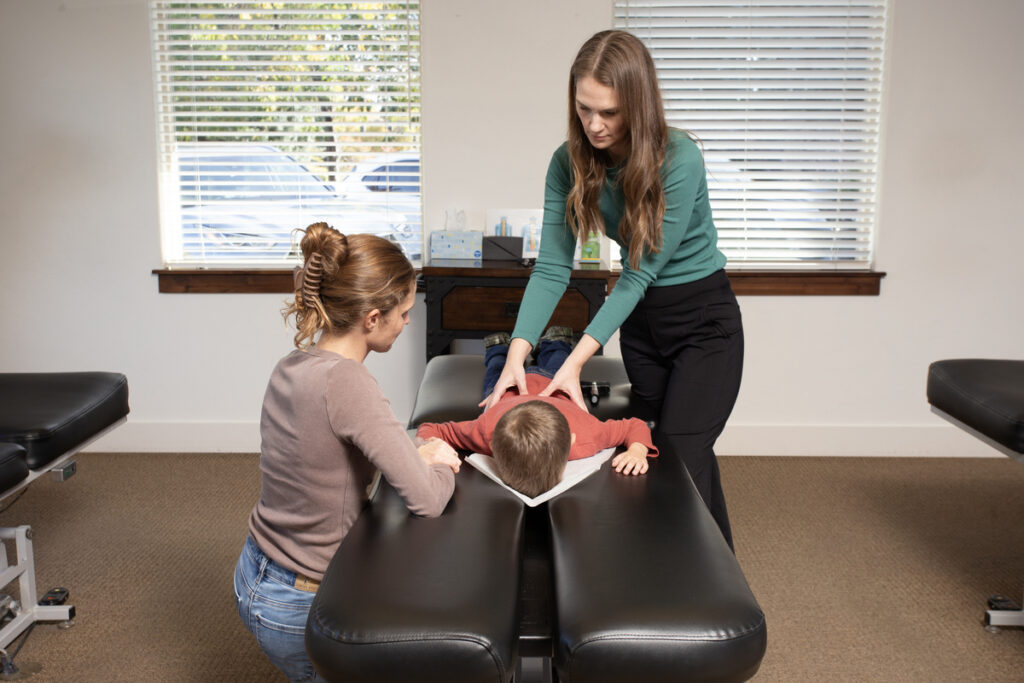
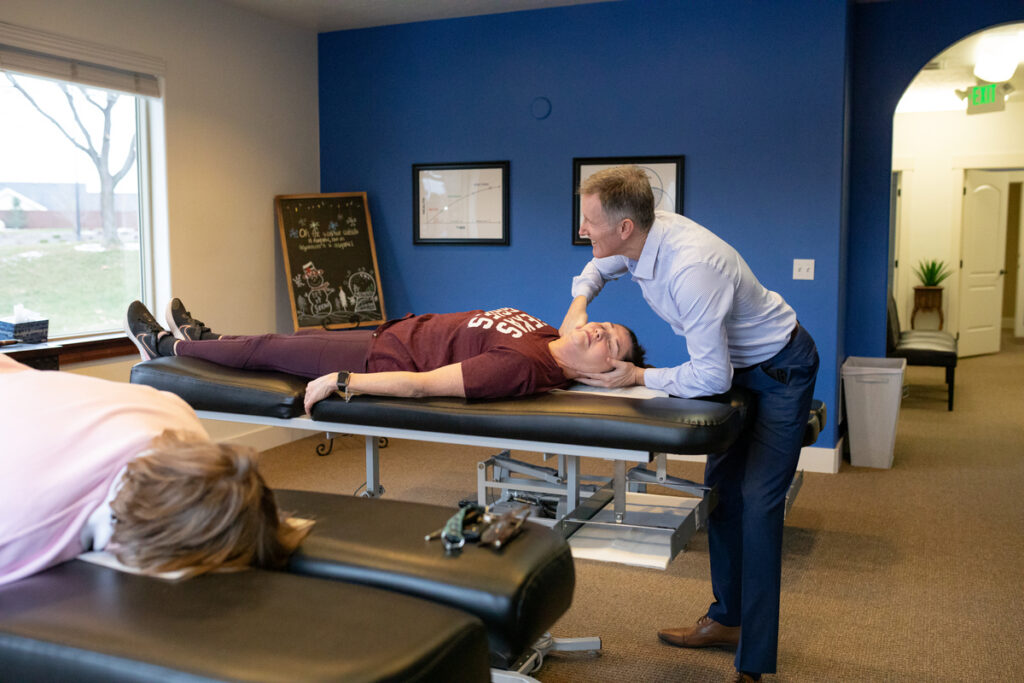
Chiropractic adjustments help restore proper movement and alignment to spinal joints that may have become restricted or misaligned due to injury, poor posture, or compensation patterns. When vertebrae move correctly, the entire spine functions more efficiently. Adjustments can also reduce muscle tension, improve nerve communication, and enhance the body’s natural healing capabilities.
We often integrate spinal adjustments with decompression therapy. After decompression creates space and reduces pressure on nerves, gentle adjustments help maintain that improvement and restore healthy biomechanics. Many patients report that the combination produces better, longer-lasting results than either treatment alone.
Beyond decompression and adjustments, a complete care plan at our Eagle practice includes therapeutic exercises designed to strengthen core muscles, improve flexibility, and correct movement patterns that contribute to spinal stress. Weak core muscles can’t properly support the spine, leading to excessive load on discs and joints. Strong, balanced muscles act like a natural back brace, protecting your spine during daily activities.
We also emphasize education and lifestyle modification. How you sit at work, how you lift groceries, how you sleep—all these daily habits either support or undermine your spine health. We’ll teach you ergonomic principles, proper body mechanics, and self-care strategies you can use at home to maintain your progress.
Our approach is always individualized. What works for one patient may not be right for another. We’ll design a treatment plan based on your specific diagnosis, pain level, goals, and lifestyle. And we’ll adjust that plan as you progress, because healing isn’t linear and flexibility is key.
Supporting Your Spine Between Treatments
Spinal decompression and chiropractic care provide the foundation, but what you do between treatments matters just as much. Here are practical, evidence-based strategies to support your recovery and maintain long-term spine health.
Stay Active With Appropriate Movement: Bed rest used to be the standard recommendation for back pain, but research now shows that prolonged rest can actually delay recovery. Gentle movement—walking, swimming, light stretching—keeps muscles active, promotes circulation, and prevents stiffness. Avoid high-impact activities and heavy lifting during treatment, but don’t become sedentary.
Maintain Proper Hydration: Your spinal discs are about 80% water. When you’re dehydrated, discs lose height and elasticity, increasing compression forces. Drinking adequate water throughout the day supports disc health and helps flush inflammatory waste products from tissues.
Practice Mindful Posture: Notice how you hold your body during daily activities. When sitting, keep your feet flat on the floor, your back supported, and your shoulders relaxed. When standing, distribute weight evenly on both feet. When lifting, bend at your knees and hips, not your back. Small adjustments add up to significant improvements over time.
Strengthen Your Core: A strong core provides natural stability for your spine. Focus on exercises that engage deep abdominal muscles, back extensors, and hip stabilizers. Planks, bridges, bird dogs, and dead bugs are excellent options. We’ll provide specific recommendations based on your condition.
Prioritize Quality Sleep: Your body does most of its healing during sleep. Ensure your mattress provides adequate support (not too soft, not too firm), and use pillows that maintain neutral spine alignment. Side sleepers often benefit from a pillow between the knees. Back sleepers might place a pillow under the knees.
Manage Stress: Chronic stress increases muscle tension, particularly in the neck and shoulders. This tension can affect spinal alignment and exacerbate pain. Incorporate stress-reduction practices like deep breathing, meditation, gentle yoga, or simply spending time outdoors in Eagle’s beautiful natural environment.
Avoid Prolonged Sitting: Sitting puts more pressure on lumbar discs than standing. If your job requires long periods at a desk, take frequent breaks to stand, walk, and stretch. Consider a sit-stand desk or simply set a timer to remind yourself to move every 30-45 minutes.
When to Consider Spinal Decompression
If you’re dealing with persistent back or neck pain, you might be wondering whether non-surgical spinal decompression is right for you. Here are some indicators that suggest it’s worth exploring this option.
Duration and Severity: Pain lasting more than a few weeks that hasn’t responded adequately to rest, over-the-counter medications, or basic physical therapy may benefit from decompression. Similarly, if your pain is significantly impacting your quality of life—interfering with work, sleep, or activities you enjoy—it’s time to consider more targeted interventions.
Radiating Pain: Pain that travels down your arm or leg (radicular pain) often indicates nerve compression. This is precisely what decompression therapy is designed to address. If you experience shooting pain, burning sensations, numbness, or tingling that follows a specific nerve pathway, decompression should be on your list of options to discuss.
Imaging Findings: If you’ve had an MRI showing a herniated disc, bulging disc, degenerative disc disease, or spinal stenosis, non-surgical decompression targets exactly those mechanical problems. Having confirmation of structural issues helps us predict who will respond well to treatment.
Failed Conservative Care: Perhaps you’ve tried massage, basic chiropractic, physical therapy, or medications without meaningful improvement. Before jumping to surgery, spinal decompression offers another conservative option that approaches the problem from a different angle.
Desire to Avoid Surgery: Maybe surgery has been recommended, but you’re hesitant. Or perhaps you want to exhaust all reasonable non-surgical options first. Decompression therapy gives you that opportunity without closing any doors—if it doesn’t work, surgery remains available.
Red Flags Requiring Immediate Medical Attention: While non-surgical decompression helps many people, certain symptoms require urgent evaluation and potentially emergency surgery. Seek immediate medical care if you experience progressive leg weakness (especially foot drop), loss of bowel or bladder control, numbness in the groin or inner thighs (saddle anesthesia), or severe, unrelenting pain that worsens despite rest and medication. These symptoms may indicate serious nerve compression requiring immediate intervention.
Here in Eagle, patients often ask, “How do I know if I’m a good candidate?” The best answer comes from a thorough examination and consultation. At The Chiropractor at Castlebury, we’ll review your history, perform appropriate tests, look at any imaging you’ve had, and give you an honest assessment about whether decompression is likely to help your specific condition.
Myths vs. Facts About Spinal Decompression
Myth: Non-Surgical Decompression is Just Fancy Stretching
Fact: While decompression involves spinal traction, it’s far more sophisticated than simple stretching. The computerized control system applies precise, rhythmic force that creates negative intradiscal pressure—something basic stretching or hanging upside down cannot achieve. The technology is designed to bypass your body’s natural protective muscle response, allowing deeper therapeutic effects.
Myth: If Decompression Doesn’t Work, Nothing Will Except Surgery
Fact: Not responding to one conservative treatment doesn’t mean surgery is your only option. Many therapeutic approaches exist—different types of chiropractic techniques, physical therapy modalities, interventional pain management procedures, acupuncture, and more. Each patient responds differently to different treatments. A comprehensive approach often involves trying multiple conservative options before considering surgery.
Myth: Decompression Permanently Fixes Herniated Discs
Fact: While decompression can help herniated disc material retract and reduce nerve compression, it doesn’t magically heal or permanently fix disc damage. Discs have limited blood supply and heal slowly. Decompression creates favorable mechanical conditions for healing and symptom reduction, but maintaining results requires ongoing attention to posture, body mechanics, exercise, and periodic supportive care.
Myth: Anyone With Back Pain Can Benefit From Decompression
Fact: Decompression therapy is effective for specific conditions—primarily those involving disc-related nerve compression. It’s not appropriate for everyone. Patients with severe osteoporosis, certain types of fractures, spinal tumors, infections, pregnancy, or severe instability are not candidates. Some sources of back pain (like muscle strains, sacroiliac joint dysfunction, or hip problems) don’t respond to decompression because they don’t involve disc compression.
Myth: Results Happen Immediately or It’s Not Working
Fact: Healing takes time. Some patients feel relief within the first few sessions, but many don’t experience significant improvement until several weeks into treatment. Disc tissue responds slowly to mechanical changes. Consistent treatment over the recommended course gives your body the best chance to respond. Judging effectiveness after just one or two sessions isn’t realistic.
Final Thoughts from The Chiropractor at Castlebury
Living with chronic spine pain is exhausting. It affects everything—your work, your relationships, your mood, your ability to enjoy the activities that make life meaningful. When someone tells you that surgery is your only option, it can feel like a door slamming shut. But here’s what we want you to know: for many people, that door doesn’t need to close. Non-surgical spinal decompression has helped countless patients find relief, avoid surgery, and reclaim their quality of life.
Here in Eagle, we’ve built our practice on helping people explore every conservative option before resorting to invasive procedures. We’ve seen patients who were scheduled for surgery cancel those appointments because decompression and comprehensive chiropractic care gave them their lives back. We’ve worked with people who had tried everything else and were about to give up—only to find meaningful improvement with a structured decompression protocol.
Does it work for everyone? No. Is it a miracle cure? Absolutely not. But it’s a safe, evidence-based, non-invasive option that deserves serious consideration if you’re dealing with disc-related problems, nerve compression, or chronic spinal pain. At The Chiropractor at Castlebury, we’re committed to giving you honest information, thorough evaluation, and individualized care that addresses your specific needs.
If you’re exploring your options, if you’ve been told surgery is inevitable, or if you simply want to understand what else might be available, we’re here to help. You don’t have to make any decisions right away. Sometimes the most important first step is simply learning what’s possible.
Frequently Asked Questions
How long does it take to see results from spinal decompression?
Results vary by individual and condition severity. Some patients notice improvement within 2-3 sessions, while others require 4-6 weeks of consistent treatment before experiencing significant relief. Most protocols involve 12-20 sessions over several weeks to give your body adequate time to respond to the mechanical changes.
Is spinal decompression painful?
No, the treatment should not be painful. Most patients describe a gentle stretching sensation that feels relaxing—many even fall asleep during sessions. If you experience pain during treatment, we adjust the settings immediately to ensure your comfort.
Will my insurance cover non-surgical spinal decompression?
Coverage varies significantly by insurance plan and provider. Some plans cover decompression as part of chiropractic care, while others don’t. We recommend contacting your insurance company directly to ask about coverage for “non-surgical spinal decompression” or “spinal traction therapy.” Our office can also help verify your benefits and discuss payment options.
Can I do decompression if I’ve already had back surgery?
In many cases, yes. Patients with failed back surgery syndrome or persistent pain after surgery may still be candidates for non-surgical decompression, but it depends on the type of surgery you had and your current condition. Spinal fusion patients, for example, would only receive decompression on non-fused segments. A thorough consultation helps determine appropriateness.
How is non-surgical decompression different from inversion tables?
Inversion tables use gravity and your body weight to create traction, but they lack computerized control and can trigger muscle guarding reflexes that limit effectiveness. Non-surgical decompression uses precise, computer-controlled cycling that bypasses protective muscle responses, creating the negative intradiscal pressure needed for therapeutic effect. The two approaches are fundamentally different in mechanism and outcome.
What happens after I complete my decompression treatment plan?
After completing your initial treatment series, we’ll reassess your progress and develop a maintenance plan tailored to your needs. Some patients require periodic “tune-up” sessions to maintain results. Others transition to primarily exercise-based care with occasional supportive treatments. The goal is always to help you maintain improvement with minimal ongoing intervention while empowering you with self-care strategies.
TL;DR: Key Takeaways
- Non-surgical spinal decompression is an FDA-cleared, non-invasive therapy that uses controlled traction to create negative pressure in spinal discs, helping reduce nerve compression and promote healing without surgery.
- Research indicates it can be effective for herniated discs, degenerative disc disease, sciatica, and spinal stenosis—conditions often treated surgically—with significantly lower risk and no recovery downtime.
- Treatment typically involves 12-20 sessions over several weeks, with many patients experiencing gradual improvement in pain, mobility, and function when combined with appropriate rehabilitative exercises and lifestyle modifications.
- While not appropriate for everyone, spinal decompression offers a conservative option worth exploring before committing to invasive surgery, particularly when imaging confirms disc-related nerve compression.
- At The Chiropractor at Castlebury in Eagle, ID, we combine spinal decompression with comprehensive chiropractic care, providing individualized treatment plans designed to address your specific condition and help you avoid unnecessary surgery whenever possible.