
Back pain affects millions of Americans every year, limiting mobility, reducing quality of life, and keeping people from the activities they love. What many don’t realize is that the foundation of lasting relief often lies not in medication or surgery, but in two fundamental aspects of wellness: spinal health and posture. Here in Eagle, ID, we see patients daily at The Chiropractor at Castlebury who’ve struggled with chronic discomfort, often without understanding how their daily habits and spinal alignment directly contribute to their pain. The good news? By understanding the relationship between your spine, your posture, and your overall health, you can take meaningful steps toward prevention and lasting relief.
What is spinal health and why does posture matter? Spinal health refers to the proper alignment, function, and mobility of your vertebrae, discs, and surrounding structures. Good posture means maintaining the spine’s natural curves while sitting, standing, and moving, which reduces stress on joints, muscles, and nerves, helping prevent pain and dysfunction.
Table of Contents
- Understanding Your Spine: The Foundation of Movement
- The Posture Connection: How Alignment Affects Pain
- Common Causes of Poor Spinal Health and Posture
- How Chiropractic Care Supports Spinal Health
- Practical Tips for Better Posture and Spinal Health
- When to See a Chiropractor
- Posture Habits: Harmful vs. Helpful
- Myths vs. Facts About Spinal Health
- Final Thoughts
Understanding Your Spine: The Foundation of Movement
Your spine is far more than a stack of bones. It’s an intricate structure of 24 moveable vertebrae, shock-absorbing discs, supportive ligaments, powerful muscles, and a complex nervous system that coordinates every function in your body. This remarkable column provides structural support, protects your spinal cord, and allows the flexibility needed for bending, twisting, and reaching.
The spine has three natural curves: a gentle inward curve in the neck (cervical lordosis), an outward curve in the mid-back (thoracic kyphosis), and another inward curve in the lower back (lumbar lordosis). These curves aren’t flaws in design. They’re biomechanical advantages that distribute mechanical stress evenly, absorb shock during movement, and maintain balance with minimal muscular effort.
When these curves remain balanced, your spine functions optimally. Weight distributes evenly across vertebrae and discs. Muscles work efficiently without strain. Nerves transmit signals without interference. But when alignment shifts—whether from injury, repetitive stress, or poor postural habits—problems emerge. Discs compress unevenly. Muscles compensate and fatigue. Joints wear prematurely. And pain often follows.
Understanding this foundation helps explain why spinal health isn’t just about treating pain after it appears. It’s about maintaining the structural integrity that prevents problems from developing in the first place.
The Posture Connection: How Alignment Affects Pain
Posture describes the position of your body during sitting, standing, and movement. Good posture maintains your spine’s natural curves and keeps your body in balanced alignment. Poor posture distorts these curves, creating mechanical stress that accumulates over time.
Consider what happens when you slouch at a desk for hours. Your head moves forward, your shoulders round, and your mid-back curves excessively. This forward head posture increases the effective weight your neck must support. For every inch your head moves forward from neutral alignment, it adds approximately 10 pounds of additional force on your cervical spine. A head that normally weighs 10-12 pounds can effectively weigh 30-40 pounds when positioned just three inches forward.
This increased load doesn’t just affect your neck. Your entire spine compensates. Mid-back muscles stretch and weaken. Chest muscles tighten and shorten. Lower back muscles work overtime to maintain balance. Over weeks, months, and years, these compensations lead to muscle imbalances, joint dysfunction, and eventually pain.
Poor posture also affects disc health. When vertebrae misalign, discs compress unevenly. Instead of distributing pressure across the entire disc surface, force concentrates on one side. This asymmetric loading accelerates disc degeneration and increases herniation risk.
The nervous system suffers too. Postural distortions can reduce the space where nerves exit the spine, potentially causing irritation, inflammation, and the radiating pain patterns many people experience as sciatica or arm numbness.
Research indicates that postural dysfunction correlates strongly with chronic pain conditions. Evidence from biomechanical studies shows that maintaining neutral spinal alignment reduces muscular effort, decreases joint loading, and minimizes nervous system stress.
Common Causes of Poor Spinal Health and Posture
Multiple factors contribute to declining spinal health and postural problems. Understanding these causes empowers you to make informed changes.
Prolonged Sitting and Sedentary Lifestyles
Modern work culture often demands hours of uninterrupted sitting. Whether at office desks, in vehicles, or on couches, prolonged sitting places the lumbar spine in flexion, flattening its natural curve. Hip flexors shorten. Glutes weaken. Core muscles disengage. This pattern creates a cascade of dysfunction that persists even after standing.
Technology Use and Forward Head Posture
Smartphones, tablets, and laptops encourage looking downward for extended periods. This “tech neck” posture strains cervical structures and has become increasingly common. Here in Eagle, many of our patients at The Chiropractor at Castlebury work remotely or spend significant time on devices, making this a particularly relevant concern.
Weak Core Musculature
Your core muscles—including abdominals, back extensors, and pelvic floor—form a muscular corset that stabilizes your spine. When these muscles lack strength or coordination, your spine loses critical support. Movements become less controlled. Joints bear excessive load. Injury risk increases.
Improper Lifting Mechanics
Lifting heavy objects with a rounded spine rather than engaging your legs and maintaining neutral alignment creates enormous compressive forces on discs. A single improper lift can cause acute injury, while repeated poor technique leads to cumulative damage.
Previous Injuries and Compensation Patterns
Old injuries—even those that seemed to heal completely—often leave subtle compensation patterns. An ankle sprain might cause you to shift weight differently. A shoulder injury might alter how you carry bags. These small adjustments ripple up or down the kinetic chain, eventually affecting spinal alignment and creating pain far from the original injury site.
Stress and Muscle Tension
Psychological stress manifests physically. When stressed, people unconsciously tighten shoulders, clench jaws, and adopt protective postures. Chronic muscle tension pulls vertebrae out of alignment and restricts normal movement patterns.
Inadequate Sleep Positions
Sleeping on an unsupportive mattress or in positions that twist or strain the spine prevents proper recovery. Your body repairs and regenerates during sleep, but poor sleeping posture undermines these healing processes.
How Chiropractic Care Supports Spinal Health
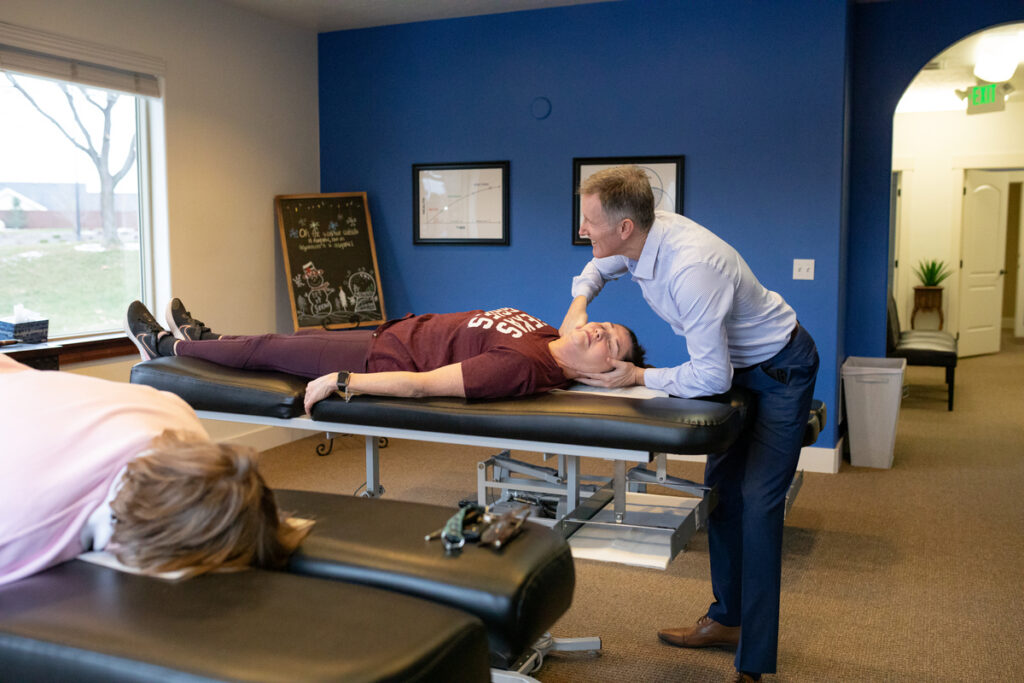
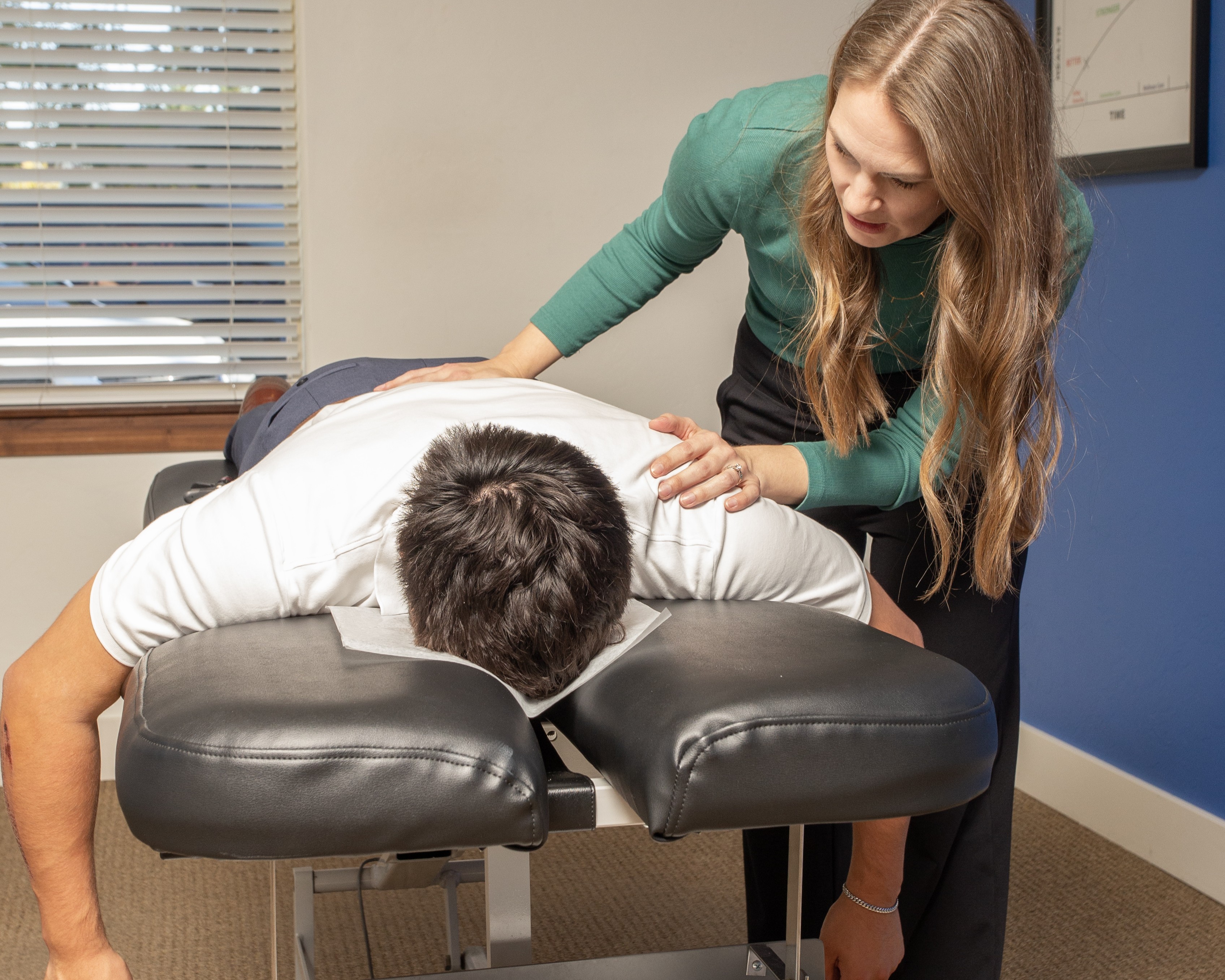
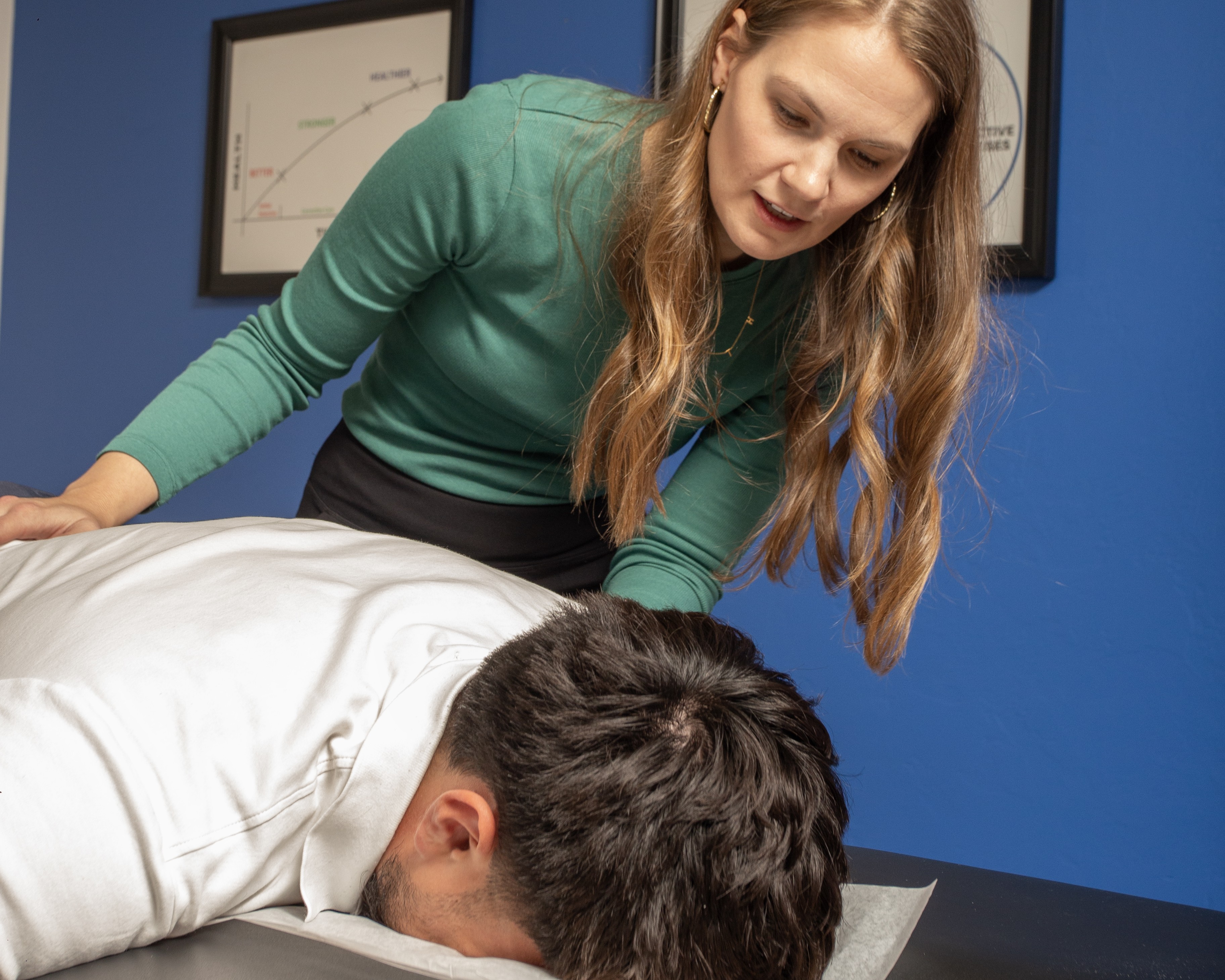
Chiropractic care offers a conservative, non-invasive approach to improving spinal health and addressing postural dysfunction. At The Chiropractor at Castlebury, Dr. Craig Ellison focuses on identifying and correcting the underlying mechanical problems that contribute to pain and reduced function.
The foundation of chiropractic care is the spinal adjustment—precise, controlled movements applied to specific vertebrae to restore proper motion and alignment. When joints become restricted or misaligned, adjustments help restore normal mechanics, reduce nerve irritation, and allow surrounding muscles to function more efficiently.
But effective care extends beyond adjustments alone. Comprehensive chiropractic treatment includes:
Postural Assessment and Correction: Dr. Craig Ellison evaluates your standing and seated posture, identifying specific areas of imbalance. This assessment guides personalized correction strategies tailored to your individual needs and daily activities.
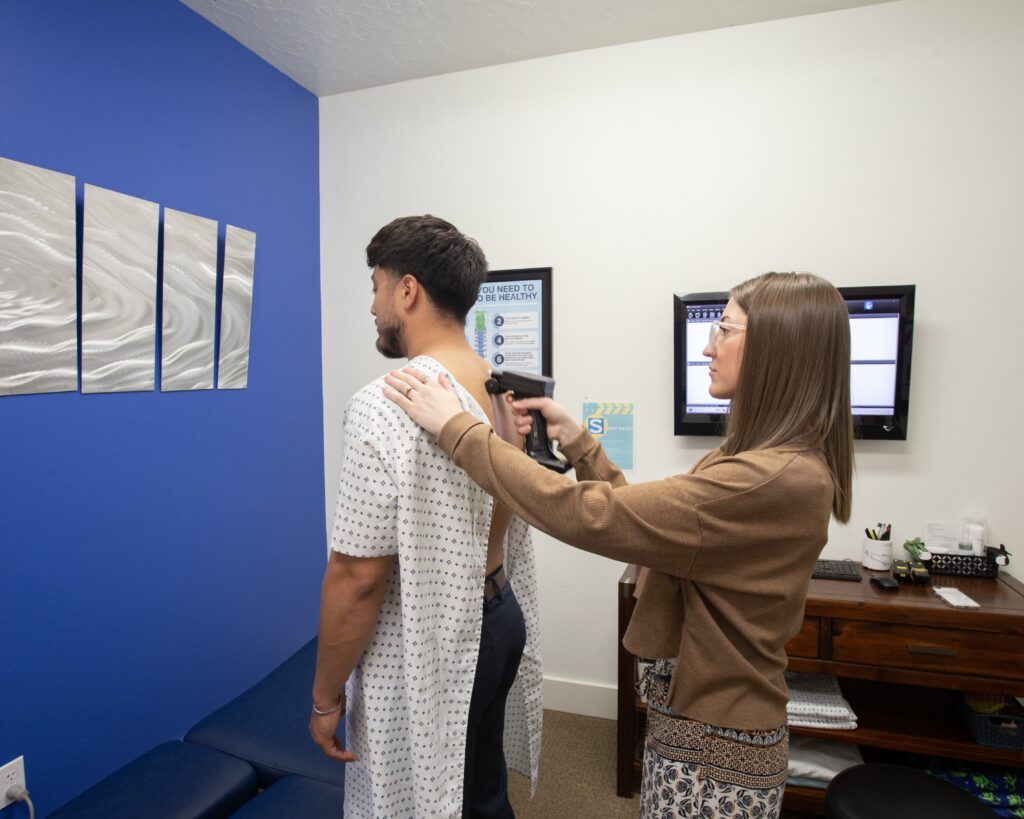
Soft Tissue Therapy: Tight, overworked muscles benefit from targeted soft tissue techniques that reduce tension, improve circulation, and restore normal muscle length. This helps muscles support proper alignment rather than pulling vertebrae out of position.
Corrective Exercises: Strengthening weak stabilizing muscles and stretching tight restricted areas creates lasting change. These exercises teach your body to maintain better alignment automatically, even when you’re not thinking about posture.
Ergonomic Guidance: Small modifications to workstations, car seats, and home environments can dramatically reduce postural stress throughout your day.
Movement Education: Learning proper lifting techniques, sleeping positions, and movement strategies prevents re-injury and supports long-term spinal health.
Research suggests that spinal manipulation combined with exercise therapy produces better outcomes for chronic low back pain than either approach alone. Evidence from systematic reviews indicates that chiropractic care can effectively reduce pain and improve function in patients with various musculoskeletal conditions.
The goal isn’t just temporary relief. It’s helping your body function optimally so that pain doesn’t keep returning. By addressing mechanical dysfunction and empowering you with knowledge and strategies for prevention, chiropractic care supports lasting spinal health.
Practical Tips for Better Posture and Spinal Health
Implementing these practical strategies can significantly improve your spinal health and reduce back pain risk. Small consistent changes compound over time to create meaningful results.
Optimize Your Workspace Ergonomics
Position your computer monitor at eye level, about an arm’s length away. Your eyes should naturally align with the top third of the screen. Keep your keyboard and mouse close enough that your elbows rest at 90 degrees with shoulders relaxed. Use a chair with proper lumbar support, or add a small cushion to maintain your lower back’s natural curve. Your feet should rest flat on the floor or on a footrest, with knees at approximately 90 degrees.
Practice the 20-20-20 Rule
Every 20 minutes of sitting, stand up for 20 seconds and look at something 20 feet away. This simple practice interrupts prolonged static postures, gives your eyes a break from screen focus, and reminds your body to move. Set a timer if needed until the habit becomes automatic.
Strengthen Your Core
Focus on exercises that engage deep stabilizing muscles rather than just superficial abdominals. Planks, bird dogs, and dead bugs are excellent starting points. Even two to three sessions weekly of 10-15 minutes can produce noticeable improvements in spinal stability.
Adjust Your Sleeping Position
If you sleep on your back, place a pillow under your knees to maintain lumbar curve. Side sleepers should use a pillow between the knees to keep the pelvis level. Your pillow should support your head in neutral alignment—not too high or too flat. Stomach sleeping generally creates the most spinal stress and is best avoided if possible.
Practice Mindful Movement Throughout Your Day
When lifting objects, bend at your hips and knees, not your waist. Keep items close to your body. Engage your core before lifting. When carrying bags or purses, alternate sides frequently or use a backpack with both straps. When standing in lines, distribute weight evenly between both feet rather than shifting to one hip.
Stay Active with Low-Impact Exercise
Walking, swimming, and cycling maintain spinal mobility without excessive impact. Movement lubricates joints, nourishes discs through increased circulation, and keeps supporting muscles strong. Aim for at least 30 minutes of moderate activity most days.
Use Your Phone Differently
Bring your phone up to eye level rather than looking down at it. When texting or reading, hold the device higher. Take frequent breaks from device use. Consider using voice commands when possible to reduce repetitive thumb and wrist strain.
Check Your Posture Regularly
Set reminders throughout the day to assess your posture. Are your shoulders rounded forward? Is your head jutting ahead? Gently correct by rolling shoulders back and down, lengthening through your spine, and drawing your chin back slightly. The goal isn’t rigid military posture but relaxed, balanced alignment.
When to See a Chiropractor
While many minor aches improve with rest and self-care, certain situations warrant professional evaluation. Seeking care early often prevents acute problems from becoming chronic conditions.
Consider scheduling a consultation with Dr. Craig Ellison at The Chiropractor at Castlebury if you experience:
Persistent pain lasting beyond two weeks: Occasional soreness after unusual activity is normal. Pain that continues despite rest and home care suggests underlying mechanical problems that need professional attention.
Pain that worsens with specific activities or positions: If certain movements consistently trigger pain, biomechanical dysfunction may be limiting normal joint motion or creating abnormal stress patterns.
Radiating pain into arms or legs: Pain that travels beyond the spine into extremities can indicate nerve involvement that benefits from prompt care to prevent progression.
Morning stiffness lasting more than 30 minutes: Difficulty moving freely after waking suggests inflammation or joint restriction that responds well to chiropractic care.
Reduced range of motion: Difficulty turning your head fully, bending forward, or rotating your trunk indicates restricted joint mechanics.
Visible postural changes: Noticing that one shoulder sits higher, your head tilts to one side, or you can’t stand up straight points to alignment issues worth addressing.
Frequent headaches or neck tension: Many headaches originate from cervical spine dysfunction and postural stress. Addressing the mechanical source often provides more lasting relief than medication alone.
Preventive care and wellness: You don’t need to wait for pain to benefit from chiropractic care. Many patients in Eagle visit The Chiropractor at Castlebury for regular maintenance care, optimizing function and catching small problems before they cause symptoms.
However, certain symptoms require immediate medical attention. Seek emergency care for: sudden severe pain after trauma, loss of bowel or bladder control, progressive weakness in arms or legs, fever accompanying back pain, or pain following significant injury. These red flags may indicate serious conditions requiring urgent medical evaluation.
Posture Habits: Harmful vs. Helpful
| Harmful Postural Habit | Helpful Alternative | Why It Matters |
|---|---|---|
| Slouching in your chair with rounded shoulders | Sitting upright with lumbar support, shoulders relaxed back | Maintains natural spinal curves, reduces disc compression and muscle strain |
| Cradling phone between shoulder and ear | Using speakerphone or headphones for calls | Prevents lateral neck strain and muscle imbalances that lead to headaches |
| Looking down at your phone for extended periods | Holding device at eye level with elbows supported | Reduces forward head posture and excessive cervical loading |
| Carrying heavy bags on one shoulder consistently | Alternating shoulders or using a backpack with both straps | Prevents unilateral muscle development and lateral spinal stress |
| Sleeping on your stomach with head turned | Sleeping on your back or side with proper pillow support | Eliminates excessive cervical rotation and lumbar extension during rest |
| Crossing legs while sitting for long periods | Keeping both feet flat on floor or footrest | Maintains pelvic level, prevents hip and lower back imbalances |
| Bending at the waist to lift heavy objects | Squatting with straight back, lifting with legs | Protects discs from excessive compression and reduces injury risk |
Myths vs. Facts About Spinal Health
Myth: Good Posture Means Sitting Perfectly Straight All Day
Fact: Perfect static posture doesn’t exist, and holding any position too long creates problems. The best posture is your next posture. Your body is designed for movement. Varying your position throughout the day, taking movement breaks, and avoiding prolonged static postures matters more than achieving some rigid ideal.
Myth: Back Pain Always Comes From a Specific Injury
Fact: While acute injuries certainly cause back pain, most chronic back pain develops gradually from cumulative mechanical stress. Small daily habits—how you sit, stand, sleep, and move—compound over time. Addressing these underlying patterns often proves more effective than treating individual pain episodes.
Myth: If You’re Young and Active, You Don’t Need to Worry About Spinal Health
Fact: Spinal degeneration and postural problems begin developing years before symptoms appear. The habits you establish in your twenties and thirties significantly impact your spinal health in later decades. Dr. Craig Ellison sees many younger patients at The Chiropractor at Castlebury who benefit from early intervention and prevention strategies.
Myth: Once Your Back Goes Out, It’ll Always Be a Problem
Fact: While previous back injuries do increase re-injury risk, addressing the underlying biomechanical causes, strengthening supporting structures, and learning proper movement patterns dramatically reduces recurrence. Many people fully recover and maintain excellent spinal health with appropriate care and lifestyle modifications.
Myth: Chiropractic Adjustments Make Your Spine Dependent on Treatment
Fact: Spinal adjustments don’t create dependency. However, just as regular dental cleanings maintain oral health or exercise maintains fitness, some people choose ongoing wellness care to support optimal function. The goal of chiropractic care is always helping you function better independently, not creating reliance on treatment.
Final Thoughts
Your spine serves you every moment of every day, supporting movement, protecting your nervous system, and enabling the active life you want to live. Taking care of it doesn’t require dramatic changes or perfection. Small consistent improvements in posture, movement habits, and body awareness create lasting benefits that prevent pain and preserve function for years to come.
Here in Eagle, ID, The Chiropractor at Castlebury is committed to helping our community understand and improve their spinal health. Whether you’re dealing with current discomfort or simply want to prevent future problems, Dr. Craig Ellison and our team provide personalized care focused on your unique needs and goals. We believe in educating our patients, empowering you with practical strategies, and supporting your journey toward better health. Your spine is worth the investment, and we’re here to help you succeed.
Frequently Asked Questions
How long does it take to improve posture?
Noticeable posture improvements typically begin within two to four weeks of consistent practice and corrective care. However, creating lasting neuromuscular changes that make good posture automatic usually requires two to three months. The timeline varies based on how long poor postural habits have been present and your consistency with corrective exercises and ergonomic modifications.
Can poor posture cause health problems beyond back pain?
Yes, research suggests that chronic postural dysfunction can contribute to headaches, reduced lung capacity, digestive issues, and even mood changes. Poor posture affects how efficiently your body functions overall, not just your musculoskeletal system. Maintaining good spinal alignment supports better nervous system function and overall wellness.
Is it too late to fix posture problems if I’m older?
It’s never too late to improve posture and spinal health, though realistic expectations matter. While you may not reverse decades of changes completely, you can absolutely improve function, reduce pain, and prevent further decline at any age. Many older patients experience significant improvement with appropriate care and consistent effort.
How often should I get my spine checked?
Frequency depends on your current condition and goals. During active treatment for pain or dysfunction, weekly or bi-weekly visits are common. For maintenance and prevention, monthly or quarterly check-ups work well for many people. Dr. Craig Ellison develops personalized care plans based on your specific needs rather than following a one-size-fits-all schedule.
Will strengthening my core really prevent back pain?
Evidence indicates that core strengthening significantly reduces back pain risk and improves outcomes for people with existing pain. Strong, coordinated core muscles stabilize your spine during movement and reduce stress on passive structures like discs and ligaments. However, core strength works best when combined with proper movement patterns and good postural habits.
Do standing desks solve posture problems?
Standing desks offer benefits by reducing total sitting time and encouraging position changes. However, standing poorly creates its own problems, including lower back strain and leg fatigue. The best approach combines sitting and standing throughout the day with attention to proper alignment in both positions. Movement and variation matter more than simply choosing sitting or standing.
TL;DR – Key Takeaways
- Spinal health and good posture are foundational to preventing back pain, reducing stress on joints, muscles, and nerves through proper alignment and movement patterns.
- Poor posture develops gradually from daily habits like prolonged sitting, forward head positions during device use, weak core muscles, and improper movement mechanics.
- Chiropractic care addresses underlying mechanical dysfunction through spinal adjustments, soft tissue therapy, corrective exercises, and personalized guidance to support lasting improvement.
- Small consistent changes in ergonomics, movement habits, and body awareness compound over time to create significant improvements in spinal health and pain prevention.
- Seeking care early when pain persists beyond two weeks, limits movement, or radiates into extremities prevents acute problems from becoming chronic conditions and supports better long-term outcomes.